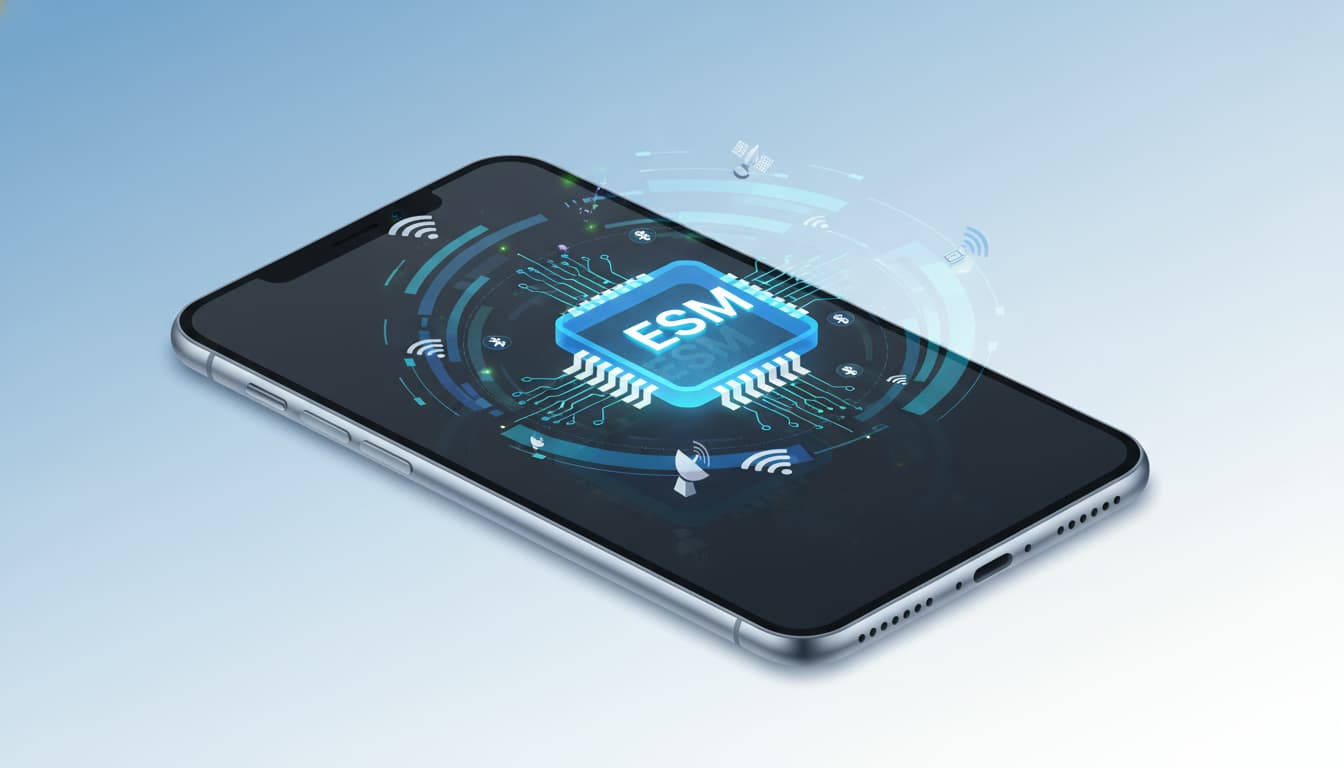

In short, what you will discover in this article: a clear definition of the eSIM, its simple functionality, its many advantages compared to the classic SIM card, and how to easily activate it on your phone. You will also learn why this technology is a game changer for mobile users.
1. Why the eSIM is a game changer
The eSIM is revolutionizing the way we use our phones. Unlike a traditional SIM card, it is directly embedded inside the device, making mobile plan management much easier. This innovation facilitates operator switching, reduces plastic waste, and allows multiple lines on a single phone. For those looking to change phones or operators, understanding what is an eSIM is essential to fully benefit from it.
2. Definition: What exactly is an eSIM?
2.1 Simple technical definition
The eSIM (embedded SIM) is a 100% digital SIM card integrated into the phone. It replaces the physical SIM card you normally insert. This embedded chip stores multiple operator profiles, allowing you to activate or switch plans without handling a physical card.
2.2 Origin and eUICC/eSIM standards
The eSIM is based on the eUICC standard, which ensures security and flexibility of stored profiles. This technology was developed to meet the growing needs for multi-operator and multi-line connectivity, especially for travelers and professionals.
3. Differences from a traditional SIM card
3.1 Practical advantages
- Instant activation via a QR code or app, without waiting for a physical card.
- Ability to have multiple profiles on one device, with easy management of work and personal lines.
- Saves space in the phone, enabling slimmer and waterproof designs.
- Reduced environmental impact by eliminating plastic cards.
3.2 Technical limitations
- Not all phones are yet compatible with eSIM.
- Some operators do not offer this technology yet.
- Managing profiles can be complex for users unfamiliar with it.
4. How does an eSIM work?
4.1 Operator profile
The eSIM profile contains the necessary information to connect to the mobile network. It is downloaded directly onto the embedded chip, without a physical card.
4.2 OTA provisioning
Over-The-Air (OTA) provisioning allows activation or changing a profile remotely via the internet by scanning a QR code provided by the operator.
4.3 Profile management
A compatible phone can store up to 5 profiles, but usually 2 lines can be used simultaneously. Management is done easily in the phone settings.
5. Advantages and drawbacks
5.1 Flexibility and multi-profile
The eSIM offers unmatched flexibility to manage multiple plans, ideal for travelers or those who want to separate professional and personal life.
5.2 Security and risks
Security is enhanced thanks to the eUICC standard, but vigilance is needed against hacking risks or loss of access. Secure profile management is essential.
5.3 Costs and operators
The cost of an eSIM is often included in plans, but some operators may charge for activation. The list of operators offering eSIM is rapidly expanding, easing adoption.
6. Device compatibility
6.1 List/criteria to check compatibility
Recent smartphones from Apple, Samsung, Google Pixel, and other brands include eSIM compatibility. It's important to check the technical specs or ask the operator.
6.2 Watches and IoT cases
The eSIM is also used in smartwatches, tablets, and connected devices, offering autonomous connectivity without a physical SIM card.
7. How to obtain and activate an eSIM
7.1 Generic step-by-step procedure
- Check your device's compatibility.
- Choose an operator offering eSIM.
- Order an eSIM via their website or store.
- Receive a QR code or activation link.
- Scan the QR code in your phone settings.
- Activate the profile and set up your line.
7.2 iPhone activation
On iPhone, go to Settings > Cellular > Add Cellular Plan, then scan the QR code.
7.3 Android activation (Samsung/Pixel)
On Android, activation is usually in Settings > Connections > SIM Cards > Add Mobile Plan, using the provided QR code.
7.4 Watch/router activation
For compatible watches or routers, the process is similar, often via a dedicated app or device settings.
8. Transferring and backing up an eSIM
8.1 Transferring between devices
Transferring an eSIM from one device to another depends on the operator. Some allow easy transfer via app, others require reactivation.
8.2 Before selling/removing a device
Before giving away a device, it's recommended to delete the eSIM profile to protect your data and prevent unauthorized use.
9. eSIM and roaming: strategies for travelers
9.1 Buying a local eSIM
Travelers can buy a local eSIM to benefit from affordable plans without changing physical cards.
9.2 International plans
Some operators offer international plans compatible with eSIM, easing connection across multiple countries.
9.3 Tips to save money
- Compare eSIM offers before traveling.
- Activate/deactivate profiles as needed.
- Use VPN apps to secure your mobile connections.
10. Offers and pricing: how to choose
10.1 MVNO vs traditional operators
Both traditional operators and MVNOs offer diverse eSIM plans. MVNOs may offer more competitive prices.
10.2 Prepaid vs subscription
eSIMs are available prepaid or via subscription, depending on usage and flexibility desired.
10.3 Quick comparison
| Offer type | Advantages | Disadvantages |
|---|---|---|
| Prepaid | No commitment, flexible | Usage cost sometimes higher |
| Subscription | Fixed price, included services | Longer commitment |
11. Security and privacy
11.1 Risks
Risks include profile hacking or loss of access in case of technical issues.
11.2 Best practices
- Use strong passwords.
- Enable two-factor authentication.
- Don’t share your activation QR code.
11.3 What to do if compromised
Contact your operator immediately to block the profile and activate a new one.
12. Common issues and troubleshooting
12.1 Activation errors
Check compatibility and QR code validity, then restart your device.
12.2 Non-functional QR code
Request a new QR code from your operator or try activation via their app.
12.3 Operator support
Operators provide dedicated support for eSIM activation and management, often available online.
13. Advanced use cases and outlook
13.1 eSIM for businesses
Companies use eSIM to easily manage mobile fleets and separate business lines.
13.2 IoT
The eSIM is key for connecting IoT devices, offering centralized and secure management.
13.3 Regulatory evolution
Standards are evolving to enhance security and facilitate global eSIM adoption.
14. Conclusion
The eSIM is an innovative technology that simplifies mobile management while providing flexibility and security. Whether you are a traveler, professional, or casual user, understanding what is an eSIM will help you better choose your plan and device. To go further, discover our practical guides and comparison tools on Skyda.co to fully master this technology.
For deeper insights, check the comprehensive guide from Bouygues Telecom about the eSIM which details concrete uses and benefits of this digital SIM card.